Frozen Pipe Repair Montreal: Safe Thawing & Emergency Solutions
Frozen pipes are common in Montrean as the Montreal winters are hard on plumbing. When temperatures drop below freezing for days at a time, water inside exposed or poorly insulated pipes can freeze solid, cutting off your water supply and putting immense pressure on pipe walls until they crack or burst. If you’ve noticed no water coming from a faucet, frost on a visible pipe, or a strange smell when you run the tap, you’re likely dealing with a frozen pipe — and it needs attention before it turns into a burst pipe and serious water damage.
Available 24/7 across Montreal and surrounding boroughs, with rapid dispatch during extreme cold snaps to protect your home from devastating floods.
➔ What Causes Pipes to Freeze in Montreal
➔ Our Frozen Pipe Repair Process
➔ Freeze-Thaw Physics & Pipe Materials
➔ Why Thawing Pipes Yourself Can Backfire
➔ Preventing Frozen Pipes Next Winter
➔ Emergency Frozen Pipe Service in Montreal
➔ Service Areas Across Greater Montreal
➔ Frequently Asked Questions
Signs You Have a Frozen Pipe
When sub-zero temperatures hit Quebec, an ice blockage can form silently inside your walls or basement. If you catch these warning signs early, there’s a very good chance our plumbers can thaw the pipe safely before it cracks or ruptures:
No water or noticeably reduced water pressure
Turning on a tap only to get a feeble trickle, sputtering stream, or complete silence is the definitive sign of an ice dam blocking the water supply line feeding that fixture.
Visible frost or ice buildup on exposed pipes
In cold basements, crawl spaces, or exterior garage walls, moisture condensing on cold metal can freeze into a visible white rind of surface frost, indicating the water inside is frozen solid.
Unusual gurgling, clanking, or whistling sounds
When water attempts to navigate past a partial freeze or pressurized air gets trapped behind an expanding ice plug, you will hear strange bubbling, knocking, or whistling within the walls.
A sour or unusual smell coming from a drain
An ice blockage in a drain line or rooftop plumbing vent stack prevents sewer gases from venting outside properly. The trapped gases escape back up into your home through sink or floor drains.
Pipes feeling unusually frigid to the touch
Pipes running along exterior foundation walls, under cantilevered floors, or across unheated crawl spaces that feel icy to the touch are on the verge of freezing solid if not already blocked.
Damp drywall or unexplained dripping
If ice has already stressed the pipe enough to create a hairline split, initial daytime warming will allow pressurized water to spray or weep behind walls before you even realize a freeze occurred.
What Causes Pipes to Freeze in Montreal?
Pipes freeze when water inside them sits still and the surrounding temperature drops low enough for long enough — a common combination during a harsh Montreal cold snap where temperatures routinely plummet below -20°C.
The pipes most at risk are usually the ones running through unheated or under-insulated spaces: basements, attics, crawl spaces, garages, and exterior walls. Older Montreal heritage homes with minimal insulation, drafty stone foundations, or homes where the heat has been turned down or shut off (a vacant property, duplex rental turnover, or vacation home, for example), are especially vulnerable.
Cold Air Infiltration & Drafts
Microscopic gaps around sill plates, outdoor hose bib penetrations, dryer vents, and foundation cracks allow freezing outside winds to blow directly across supply lines, flash-freezing pipes even when indoor room heating is running.
Exterior Wall Pipe Placement
In many older Montreal duplexes and triplexes in the Plateau, Outremont, and Rosemont, plumbing was routed through outer brick-and-stud cavities where thermal insulation is minimal or settled, exposing pipes to sub-zero temperatures.
Thermostat Setback During Cold Snaps
Lowering thermostat temperatures below 16°C (60°F) to save heating costs during deep freezes allows concealed wall and basement micro-climates to dip below freezing, turning dormant water into solid ice.
Unprotected Outdoor Hose Bibs
Failing to disconnect garden hoses or lacking frost-free sillcocks traps water inside the exterior pipe stub. The ice expands backwards through the foundation wall, splitting interior copper supply pipes.
Our Frozen Pipe Repair Process
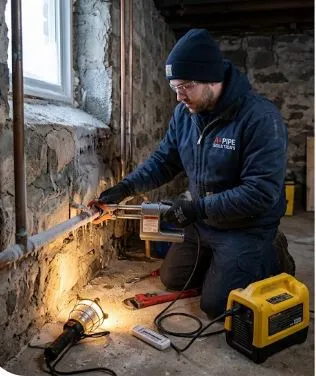
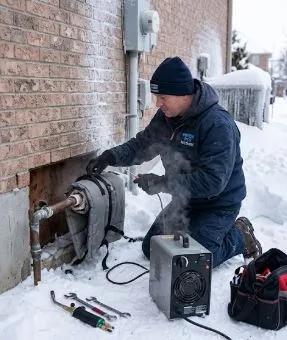
Thawing a frozen water line requires precision and specialized safety equipment. Applying uncontrolled heat to a compromised pipe can trigger an immediate rupture and catastrophic indoor flooding. Our licensed plumbers follow a safe, controlled five-step protocol:
Assessment & Leak Check
We locate the frozen section using thermal imaging sensors and inspect surrounding plumbing for bulging, seam splits, or hairline cracks before applying any heat, since thawing a pipe that’s already cracked can cause a sudden massive leak.
Safe, Controlled Thawing
We use gentle, consistent, thermostatic heat applied directly to the affected section — never an open flame or anything that risks scorching the pipe or nearby framing. This safe approach eliminates thermal shock and prevents pipes from cracking.
Water Flow Restoration
Once the ice blockage has safely melted and cleared, we systematically open connected taps, bleed trapped air, and test line pressure to confirm water is flowing smoothly without pressure drop elsewhere in the house.
Repair or Full Replacement
If the pipe has already cracked or burst, we shut off isolation valves, cut out the damaged section, and replace it outright using durable, freeze-tolerant materials (such as PEX or type L copper) suited to the space, then pressure-test the full run.
Prevention Recommendations
Since a pipe that froze once is likely to freeze again under identical weather conditions, we flag vulnerable draft points and provide permanent solutions — including insulation wrap, pipe relocation, or heating cable installations.
Freeze-Thaw Physics & Pipe Materials
Different plumbing materials react differently to Montreal’s harsh freezing cycles. Knowing what pipes are installed in your home helps determine their vulnerability and the right repair strategy:
Copper Pipes
Vulnerability: High. Copper conducts thermal energy rapidly, meaning cold drafts freeze water inside copper faster than other materials. Being rigid, copper expands minimally before splitting along longitudinal seams or blowing out soldered elbow joints.
PEX (Cross-Linked Polyethylene)
Vulnerability: Low to Moderate. PEX-A pipe is flexible and can expand slightly as ice forms, often surviving freezes that would split rigid copper. However, mechanical brass and plastic fittings remain vulnerable to cracking under ice pressure.
CPVC & Rigid Plastic
Vulnerability: Extreme. CPVC becomes brittle when subjected to sub-zero temperatures. Ice expansion almost always results in brittle shattering, requiring prompt section cutout and replacement.
Galvanized Iron Pipes
Vulnerability: Moderate. Found in older heritage properties. While steel walls are thick, internal corrosion creates weak spots where expanding ice fractures the pipe body or strips threaded joints.
Why Thawing Frozen Pipes Yourself Can Backfire
It’s tempting to grab a hair dryer, propane torch, or a space heater and handle it yourself, and for a very minor, fully accessible freeze, gentle household warmth might work. However, DIY pipe thawing frequently leads to disaster:
Pipes in hard-to-reach spots (behind walls, under concrete slabs, inside crawl spaces) aren’t safe to work on without commercial thermostatic equipment. If you’re not confident the pipe is fully accessible and undamaged, it’s worth calling a licensed plumber before you start applying heat.
Preventing Frozen Pipes Next Winter
A few targeted plumbing and home winterization upgrades go a long way toward keeping frozen and burst pipes from happening again:
Emergency Frozen Pipe Service in Montreal
Frozen pipes rarely wait for business hours. During extreme Quebec cold snaps, an unaddressed freeze can rupture overnight, causing thousands of dollars in water damage before morning. If you’re dealing with no water, a suspected freeze, or an active leak anywhere in Montreal, our emergency team is ready to respond quickly, assess the situation, and get your water flowing safely again — with clear, upfront pricing and no guesswork.
Serving Montreal and the Greater Area
Our licensed plumbers provide rapid frozen pipe thawing, burst pipe replacement, and winter plumbing winterization across all Montreal boroughs and surrounding municipalities:
Frequently Asked Questions — Frozen Pipe Repair Montreal
Expert answers to urgent questions regarding frozen pipes, thawing timelines, burst pipe risks, and insurance coverage in Montreal.
How long does it take to thaw a frozen pipe?
It depends on the pipe’s location, material, and how thick the ice blockage is. An easily accessible exposed basement pipe with a small localized freeze might thaw in under an hour with controlled, commercial thermal equipment. However, pipes concealed behind finished drywall, under concrete slabs, or running through deep exterior walls can take several hours, especially if the freeze extends along several feet of plumbing.
What happens when a frozen pipe bursts?
As water freezes, it expands by about 9%, creating extreme hydraulic pressure inside the closed pipe. This pressure cracks or splits the pipe wall. Once the ice blockage thaws or pressure builds enough, water escapes at the crack under high municipal pressure (40–70 PSI). This can discharge hundreds of litres of water per hour, flooding a basement or damaging walls, ceilings, and flooring within minutes — which is why a suspected freeze should be treated as an urgent emergency before it thaws.
How do I know if my pipe has already burst versus just frozen?
A frozen-but-intact pipe usually shows no water flow when fixtures are turned on, but there is no active dripping or visible water accumulation. A burst pipe typically shows visible water stains spreading across drywall, dripping from ceilings, puddles on floors, damp insulation, or a sudden drop in water pressure throughout the entire house as water escapes before reaching the tap.
Can I prevent frozen pipes without major renovations?
Yes. Installing thick foam insulation sleeves, sealing drafty foundation cracks and rim joists with expanding foam, maintaining a steady thermostat temperature (never below 16°C / 60°F), and disconnecting exterior garden hoses before winter address most of the risk without any structural remodeling. Pipe rerouting is usually only necessary for pipes that freeze repeatedly despite quality insulation.
Is frozen pipe repair covered by home insurance in Montreal?
Coverage varies by policy and insurance provider, so it’s always advisable to verify directly with your insurer. Many Montreal home insurance policies cover sudden, accidental burst-pipe water damage and repairs, but frequently exclude damage caused by negligence — such as turning the heating off in an unoccupied home during freezing winter temperatures or failing to drain outdoor taps.
Should I leave a faucet dripping during an extreme Montreal cold snap?
Yes. During extreme polar vortex freezes (below -20°C), allowing a faucet served by exposed or exterior-wall pipes to drip at a slow, steady trickle can prevent freezing. The moving water relieves the dangerous pressure buildup between the ice dam and the tap, significantly reducing the probability of a burst pipe.
Ready for Fast, Professional Frozen Pipe Repair in Montreal?
Don’t let a frozen pipe turn into a catastrophic basement flood. Contact our certified Montreal plumbers immediately for safe, flame-free thawing and durable burst pipe repairs.