Sewer Backup Repair Montreal: Camera-Verified Diagnosis
When a sewer line fails, it doesn’t stay a plumbing problem for long — it becomes a property, health, and safety problem. Multiple slow drains, gurgling fixtures, sewage-tinted water backing up into your basement — all of it points to one thing: your main sewer line is compromised. Our Montreal sewer backup repair team diagnoses the cause fast, stops the backup at the source, and restores your line using the least disruptive method available, whether that’s a targeted spot repair, a full hydro-jet cleaning, or trenchless replacement.
Available 24/7 across Montreal and surrounding boroughs, with rapid same-day dispatch for active sewage backups.
Signs You May Have a Sewer Line Problem
Sewer issues rarely show up out of nowhere. Most homeowners notice a pattern of small warning signs before a full backup hits. If you catch these early, our team can often intervene with a targeted clean before it turns into standing sewage:
Slow or gurgling drains in multiple fixtures at once
If your kitchen sink, tub, and toilet all slow down or gurgle together — especially when you run one fixture — the blockage isn’t in a single branch drain. It’s in the main sewer line, choking flow before it can reach the city main.
Frequent clogs that keep coming back
A clog that clears today and returns in days or weeks is the classic signature of a deteriorating main line: narrowing, root intrusion, or a belly trapping waste. One-off cleanouts only give temporary relief while the underlying line problem persists.
Foul odors from drains, cleanouts, or your yard
Sewer gas with a rotten-egg or manure-like smell leaking from floor drains, the basement cleanout, or even surfacing through the soil above the sewer line means wastewater is escaping or gas is bypassing your trap and vent system.
Water backing up into tubs, showers, or basement drains
When you run the washing machine or flush the toilet, wastewater surges back into the tub, shower, or basement floor drain. This is an active main line backup — sewage being redirected through the lowest available fixtures in the house.
A noticeably greener or lusher patch of grass
Leaking wastewater and root-driven moisture act as fertilizer. A strip of lawn that stays greener, grows faster, or feels spongier than the rest of the yard often traces directly above the compromised section of the sewer line.
Soggy, sunken yard areas or foundation cracks
Continuous sewer leaks erode and saturate the supporting soil. Noticeable depressions, persistent wet spots that never dry, or new cracks appearing in the foundation slab can all be downstream effects of a failing underground sewer line.
What Causes Sewer Backups in Montreal?
Montreal’s older housing stock and freeze-thaw cycles make certain causes especially common here. Knowing the cause changes the repair — a root-clogged line often needs only cleaning and a root-barrier liner, while a collapsed or bellied pipe needs trenchless replacement or excavation:
Tree Root Intrusion
Roots seek out the moisture inside aging clay and cast-iron pipes, entering through loose joints, cracked seams, and corroded couplings. Once established, they multiply, fill the pipe, and clog it — and they will return after every cleaning unless the entry points are sealed.
Pipe Deterioration
Decades-old clay and cast-iron lines suffer from internal corrosion, offset joints, and collapsed sections. Much of Montreal’s housing stock dates from the 1900s–1950s, so even a spotless basement can be connected to a severely compromised sewer line.
Grease and Debris Buildup
Kitchen grease, soap scum, hair, and other solids gradually coat the pipe’s interior walls. Over years, the buildup narrows the effective flow path until it shrinks by half or more — at which point flow stops entirely, usually during peak household use.
Bellied or Sagging Pipe Sections
Soil settlement beneath the sewer line can cause a section to sag into a “belly,” where solids and paper settle and accumulate. Bellies are the hardest clogs to clear permanently and a leading cause of repeated backups in older Montreal neighborhoods.
Municipal Line Surcharges
During heavy rain, the city sewer system can become overwhelmed and surcharge, pushing wastewater back up into connected homes through floor drains and cleanouts. A backwater valve is the standard protection against this shared-infrastructure event.
Foreign Objects & Structural Collapse
Wipes, sanitary products, and other flushables create dense blockages that neither water nor chemicals dissolve. In the most advanced cases the pipe wall itself gives way — a structural failure that cleaning can no longer fix and which requires section repair or full replacement.
How We Diagnose the Problem
We don’t guess. Every sewer backup call starts with a proper, documented diagnosis — the same three-step protocol on every job, whether it’s a first-time clog or a property with decades of clog history:
Sewer Camera Inspection
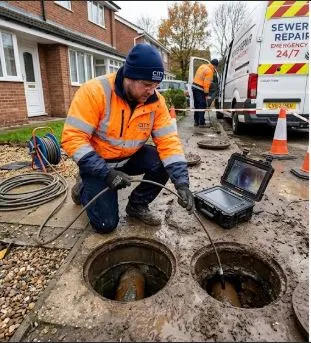
A waterproof, LED-lit video camera on a push-rod cable travels the full length of your main line from the cleanout, streaming live footage. In real time we identify cracks, root intrusion, bellies, offset joints, scale buildup, and the exact location of the blockage — before we touch a single tool.
Locating & Mapping
Using the camera head’s positioning data and line locating, we pinpoint the exact depth, distance, and lateral position of the problem. That means any excavation required later is targeted and measured — never exploratory digging across the yard.
Assessment & Options
You get a clear, plain-language explanation of what’s wrong, what caused it, and the repair methods that fit your specific line, property, and budget — with upfront pricing for each option, so you decide with full information.
Sewer Repair Methods We Use
Once the camera tells us exactly what’s wrong, we match the repair to the damage. Three proven methods cover virtually every sewer line condition found in Montreal properties:
Hydro Jetting
High-pressure water — up to 4,000 PSI — is fired through specialized multi-directional nozzles that scour grease, roots, and debris from the full inner diameter of the pipe, restoring it to original flow capacity without cutting into the pipe wall. Often the right call for recurring clogs on a structurally sound pipe, and the standard follow-up after root removal.
Trenchless Sewer Repair
A new pipe liner or burst-fit pipe is installed through the existing cleanout and inspection points: the old line is either lined with a resin-saturated sleeve that cures in place into a seamless new pipe, or crushed outward while a new pipe is pulled in behind it. No yard, driveway, or foundation excavation — usually faster, less disruptive, and less expensive than digging, with a service life measured in decades.
Traditional Excavation & Replacement
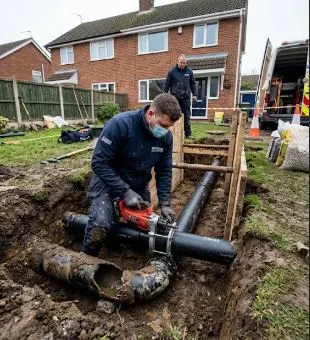
For severely collapsed, badly misaligned, or structurally failed sections, direct excavation and pipe replacement is sometimes the only reliable long-term fix. We manage the dig, backfill, and full restoration of the excavated area so the property remains usable throughout and looks right afterward.
Cleanup and Post-Repair Service
A backup doesn’t end when the pipe is fixed. Contaminated water, residue, and dig sites all need professional handling, and we take responsibility for the whole job — not just the pipe:
Preventive Sewer Line Maintenance
Most emergency backups are preventable. Regular sewer line maintenance — periodic camera checks and cleaning on a schedule suited to your pipe material, age, and tree coverage — catches root intrusion and buildup long before they cause a backup. If your property has mature trees near the sewer line or pipes older than 40 years, this is worth budgeting for annually:
Serving Montreal and the Greater Area
Our licensed plumbers provide emergency sewer backup repair, camera inspection, hydro-jetting, and trenchless pipe restoration across all Montreal boroughs and surrounding municipalities:
Frequently Asked Questions — Sewer Backup Repair Montreal
Expert answers to common questions about sewer line damage, trenchless repair, cleanup, and preventive maintenance in Montreal.
What are the first signs of a broken sewer line?
Slow drains in multiple fixtures at the same time, gurgling sounds when one fixture runs, foul odors from drains, floor cleanouts, or the yard itself, and water backing up into a tub, shower, or floor drain when you flush a toilet or run laundry. Seeing more than one of these at the same time is the strongest indicator that the main line — not a single drain — is the problem, and a camera inspection is the right next step.
How can I tell if my sewer line is damaged without digging?
A sewer camera inspection is the most reliable way. A waterproof video camera travels the full length of the line from the cleanout and shows cracks, root intrusion, bellies, offset joints, and blockages inside the pipe in real time — with zero excavation. You see the actual condition of your line before committing to any repair, which is why we treat the camera pass as step one on every job.
What does a mound of dirt after sewer repair mean?
It’s simply backfilled soil from where the pipe was accessed or replaced. Backfill is compacted in layers, but it still settles over the following weeks. Once it has stabilized, the area can be leveled, regraded for proper drainage, and reseeded or topped with new soil and lawn. We restore the excavated area as close to its original condition as possible.
How often should sewer lines be cleaned?
For most homes, every 18–24 months is a reasonable interval for professional cleaning. Properties with mature trees near the line, older clay or cast-iron pipes, or a history of repeated clogs should be camera-inspected and cleaned annually. Kitchens that dispose of heavy grease and older duplexes with shared drainage benefit from the shorter end of that range.
Is trenchless sewer repair as durable as full replacement?
Yes, when the pipe is a suitable candidate. Trenchless liners and burst-fit pipes are rated for decades of service life — modern cured-in-place pipe liners commonly carry warranties measured in 50 years — and they avoid the cost, disruption, and restoration work of digging up your yard, driveway, or foundation. That’s why trenchless is our first recommendation whenever the line’s condition supports it.
Can a sewer backup be a health hazard?
Yes. Backed-up sewage carries bacteria, pathogens, and contaminants that pose a real health risk to everyone in the home. Standing wastewater in a basement, on floors, or in the yard should be treated as a biohazard requiring proper pump-out, sanitization, and disposal — not just a plumbing inconvenience. Keep children and pets away from standing sewage water until the area has been professionally cleaned.
Ready for Fast, Professional Sewer Backup Repair in Montreal?
Don’t let a slow drain turn into standing sewage. Contact our certified Montreal plumbers now for camera-verified diagnosis and the least disruptive, most durable repair for your line — with upfront pricing and cleanup included.